We deliver risk-aligned nuclear I&C that reduce unnecessary complexity, accelerate deployment, and meet the unique regulatory needs of each extraordinary reactor.
Most advanced reactor vendors trigger unreasonable commercial plant I&C requirements without meaning to. A procurement package that cites common industry standards without clarification unknowingly tells vendors to quote Class 1E, safety-related systems and a full software lifecycle. It commits you to qualification efforts and lead times you were never obliged to accept.
of schedule lost to a single misclassification
in avoidable cost when I&C is scoped like a commercial plant
typical lead time for NQA-1 pedigreed digital safety related controls.
Vendors quote what they recognize. Mention the wrong commercial standard and the quotation comes back sized for a 1,000 MW plant.
Classifications are hard to unwind. A safety related label applied early without the requisite context can cause loss of regulatory confidence when it’s walked-back.
Schedule is the real constraint. An over-designed reactor that never reaches criticality proves nothing.
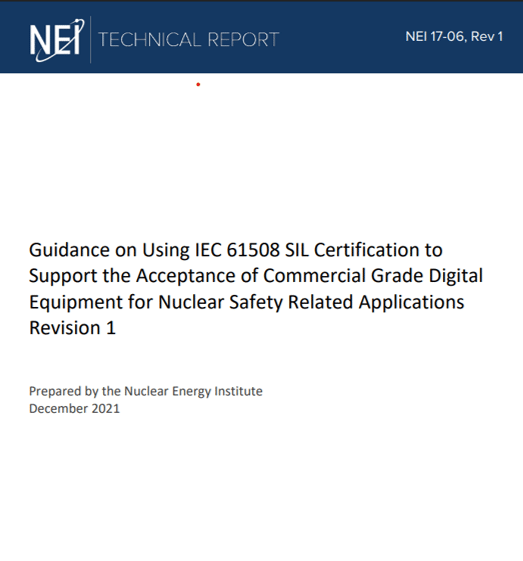
We design, procure, integrate and license complete instrumentation and control systems scoped to your actual licensing basis rather than to commercial power plant assumptions. The RG 1.250-endorsed NEI 17-06 process for CGD’ing digital safety systems let us deliver qualified reactor protection systems faster and at a lower cost. The deliverable set contains what your licensing basis requires and nothing else: a defensible safety analysis, reliable protective functions, and QA documentation that passes review without drama.

Concentrated regulatory expertise for teams that need an insider read. This is the difference between hiring us to write your SAR Chapter 7 and teaching your team to defend it to the NRC. Engagements focus on the decisions that carry the most weight: whether to pursue Class 104(c) or DOE authorization, whether your safeguards functions can be justified as non safety, and where a vendor quotation reflects commercial habit rather than your requirements. We bring direct NPUF branch negotiation experience into pre-application strategy, so you know where to push back and where to comply.
The return comes from the decisions you do not make. The safety related system you avoid specifying. The nine month qualification program you did not need. The commercial standard you successfully challenge with the right precedent.
We begin with your hazard analysis and justify the minimum viable product (MVP) for your safety classified systems.
We negotiate your licensing position with the regulator from a position of experience and precedent. We read between the lines.
We become a part of your team, seamlessly. We adopt and adapt to your uniquely purposed processes.
I&C systems designed and licensed under both the NRC’s Class 104 and the DOE’s Pilot Program pathways.
Ten questions covering scope, vendor language, documentation and reviewer expectations. Score it in two minutes and see where your licensing plan is most likely to cost you time and money.
PDF, one page, no email required.
Ryan is a nuclear instrumentation and control consultant focused on non commercial test reactors, licensing strategy and lean system design. He has written SAR Chapter 7s for demonstration reactors, negotiated with the NRC NPUF branch, and designed I&C architectures on NUREG-1537 and Class 104(c) principles for research, test and demonstration reactors under both DOE and NRC authority.
If you are underwhelmed by vendors and regulators treating your microreactor like it needs Westinghouse level systems, that is the conversation we should be having.
Why the twelve month window in the DOE Advanced Reactor Pilot Program rules out traditional safety related I&C, and how a graded, hazard based approach gets a test reactor to criticality on time.
Thirty minutes, no pitch. Bring your schedule, your classification questions, or a vendor quote that feels three times bigger than it should be.